How to Assemble RTA Kitchen Cabinets: A Step-by-Step Guide from Blueprint Cabinets

Meet the author

Patrick leads the in-person experience at BluePrint Cabinets, helping homeowners and contractors plan their kitchens from the first showroom visit to the final measurements. With years of experience in the cabinet industry, he’s spent hundreds of hours working through real kitchen layouts, solving design challenges, and making sure cabinets fit the way they should in real homes.

Summarize this article with:

ChatGPT
Perplexity

Thinking about renovating your kitchen without blowing your budget? Ready-to-assemble (RTA) cabinets from Blueprint Cabinets make it possible to get a beautiful, professional-looking kitchen while saving tens of thousands of dollars compared to having cabinets custom-built and installed. Best of all, you don’t need to be a professional contractor to put them together.

In this guide, Blueprint Cabinets co-founder Pat walks us through the complete process of assembling a base 12-inch cabinet from start to finish — from unboxing to installing the door and drawer. Follow along and you’ll be building your own kitchen cabinets in no time.

What You’ll Need: Tools & Materials

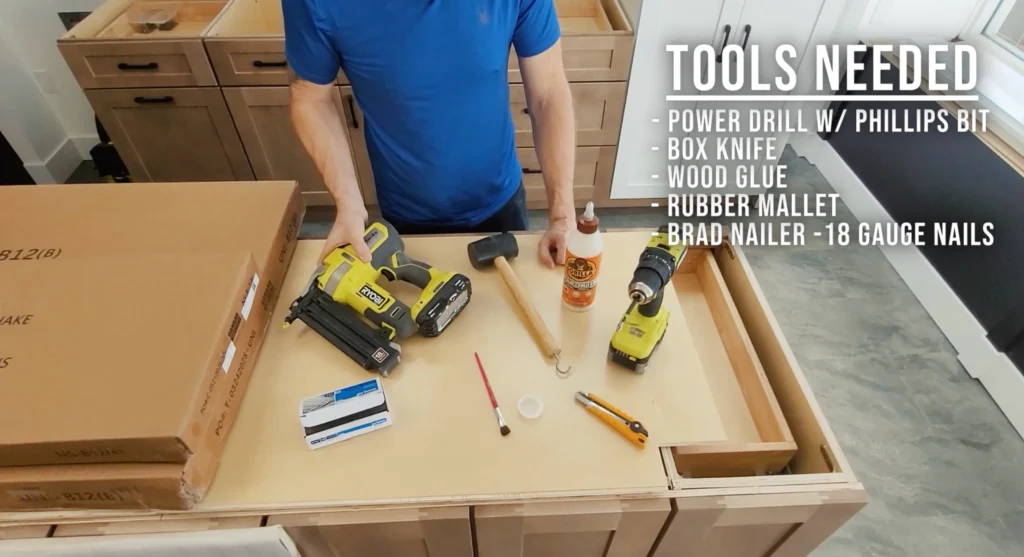
Before you get started, gather these basic tools:

  • Drill with a Phillips bit
  • Utility knife
  • Wood glue (Gorilla Glue or similar quality brand) and a small brush
  • Rubber mallet
  • Pin nailer (18-gauge Brad nailer, air or electric) with 1¼” 18-gauge Brad nails
  • Damp rag for wiping excess glue
Tools needed for the build
Everything you need laid out before you start — keeps the build efficient.

The pin nailer is the one tool most homeowners might not already own, but they’re widely available at hardware stores for around $150. Both air-powered and electric models work fine — just look for one that fires 18-gauge Brad nails.

Understanding Your Cabinet Boxes

With the exception of specialty cabinets, most Blueprint cabinets are made up of two boxes:

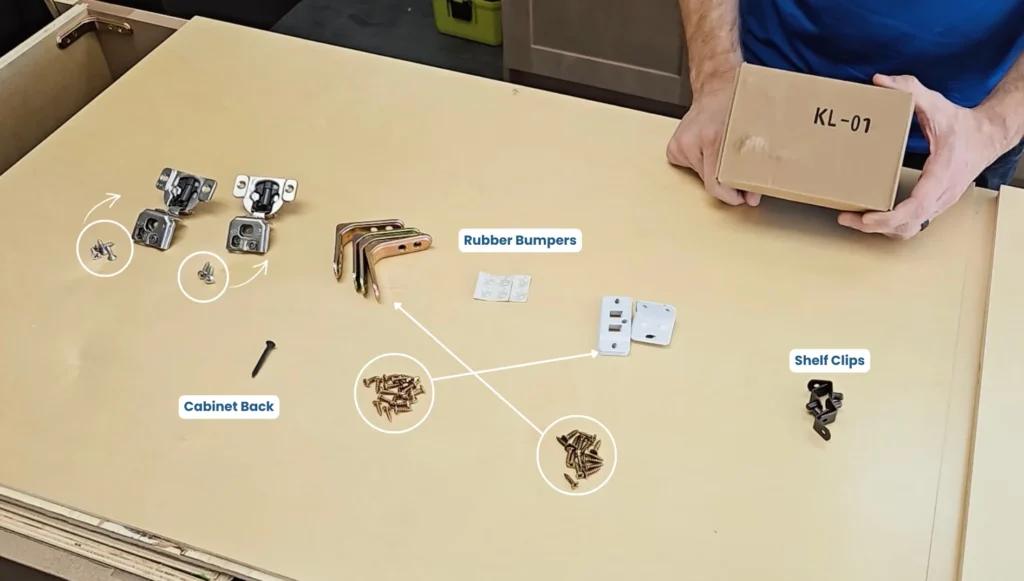
  • Universal (Uni) Box — The carcass: AA-grade plywood sides, back panel, cabinet bottom, toe kick, shelf, drawer box, drawer slides, and a full hardware kit (hinges, L-brackets, screws, bumpers).
  • Finish (A) Box — The visible parts for your chosen style: face frame, door, drawer front with pre-cut dovetails, and any finished end panels.
Sort your hardware before you start — screws, L-brackets, hinges, and bumpers all separated.

Pro tip: Sorting through the hardware kit before assembly is one of the best time-savers. Even if your helper isn’t handy, having them sort parts will reduce assembly time.

Step-by-Step Assembly: Base Cabinet

Step 1: Prepare Your Face Frame

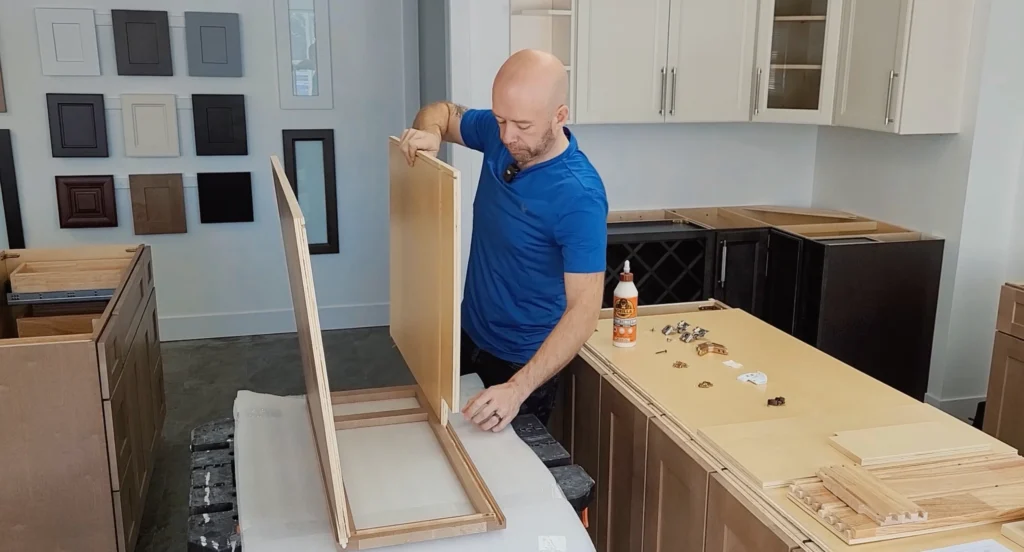
Lay a piece of packing cardboard on your work surface to protect the finished face frame. Place the face frame face-side down. Run a bead of wood glue along the channels, then carefully slide the gable side panels into the sliding dovetail joint, aligning the tail with the groove inside the face frame.

*Important note, if one or more of your cabinet sides are finished matched, discard the unfinished panel and install the desired finished side at this time. You may also finish your gable sides by applying a ¼” veneer panel directly on top of the unfinished panel.

Glue applied and side panels sliding into the face frame channels.

Step 2: Install the Cabinet Bottom

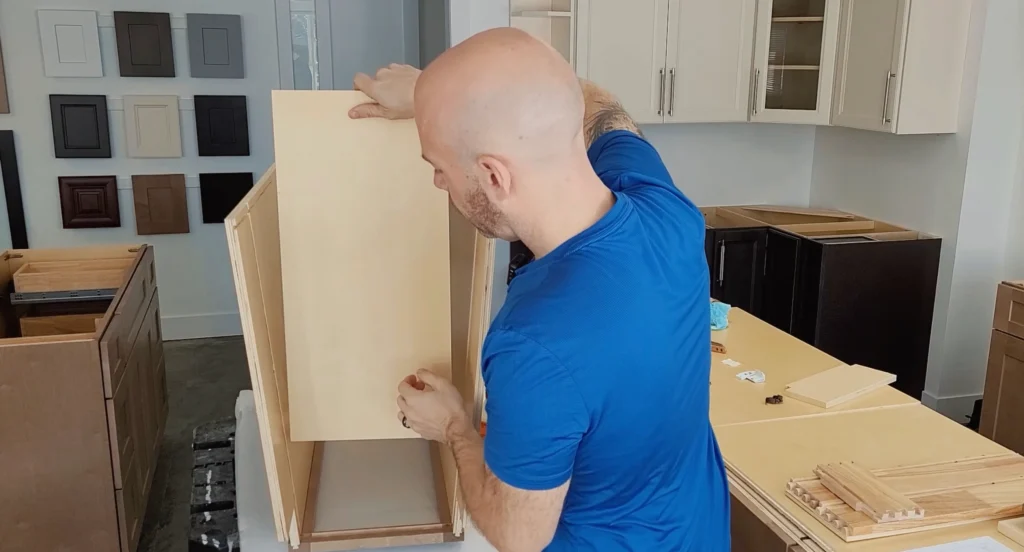
Apply a small amount of wood glue to the face of the cabinet frame where the bottom panel will sit, then drop it down into place. Stand the cabinet upright and keep a damp rag nearby to wipe up any glue squeeze-out as you go.

Cabinet bottom dropped into place — wipe excess glue immediately.

Step 3: Install the Cabinet Back

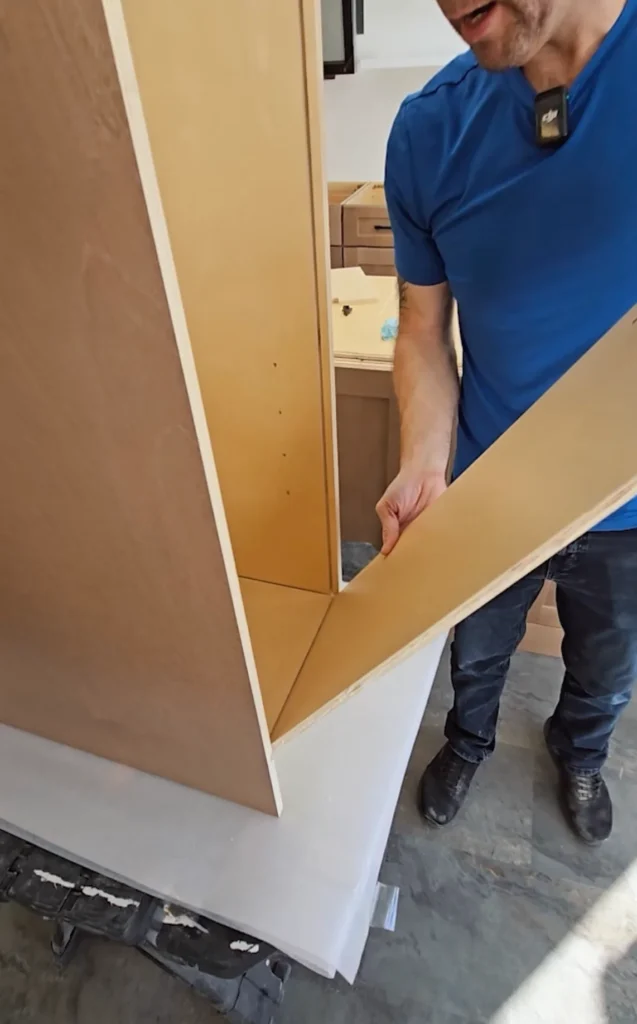
Apply glue into the bottom groove and along the side channels of the back panel. Gently spread the side panels apart just enough to slide the back panel in at a downward angle, hook it onto the cabinet bottom, then lift up and press the sides together. Secure with the long black screw(s) from your hardware pack.

Back Panel sliding in at an angle
Back panel sliding in at an angle — lift upward and press the sides together.

Step 4: Pin Nail the Sides

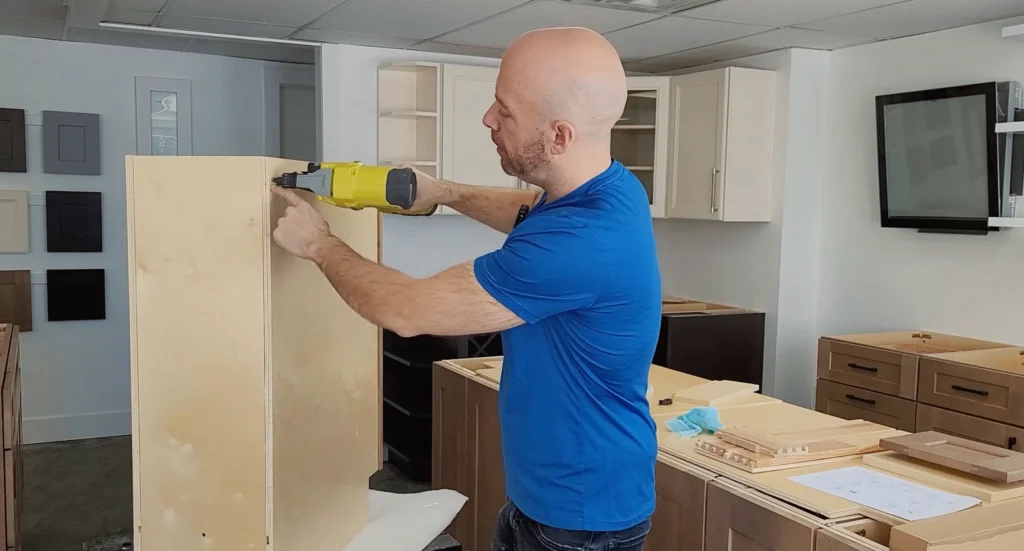
Use your Brad nailer to pin the side panels every 6 inches down the back edge. Hold the nailer sideways (horizontal) so that if a pin bends, it stays within the cabinet wall. For finished side panels, you can skip pinning and rely on the L-brackets alone, or pin and fill the holes later with the included touch-up putty.

Nailer held sideways to prevent pins splitting out
Nailer held sideways — keeps any wayward pins within the cabinet wall.

Step 5: Attach the L-Brackets

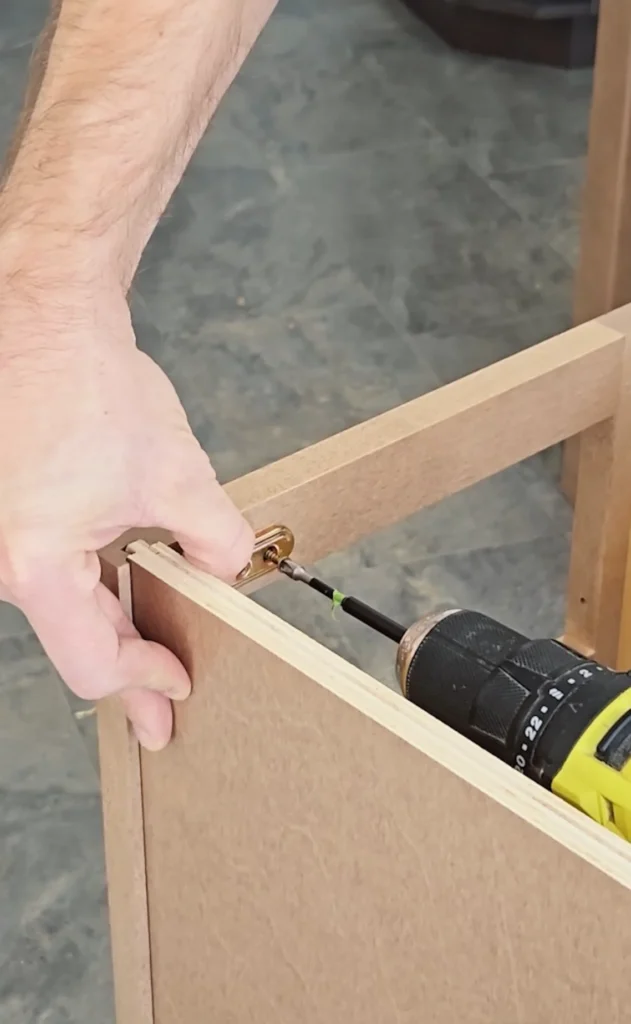
Secure L-brackets to the upper inside front corners, pulling the face frame tight against the sides as you go. Spin your drill in reverse briefly before driving each screw into the face frame to prevent splitting. Flip the cabinet upside down, attach the lower L-brackets and toe kick, and use any bonus brackets on the back corners for extra rigidity.
L-brackets pulling the face frame tight to the cabinet box — critical for alignment when cabinets are joined.

Assembling the Drawer Box

The drawer box uses a dovetail joint system for a strong, and beautiful connection. 

Align the pieces and press them together evenly — avoid excess force.

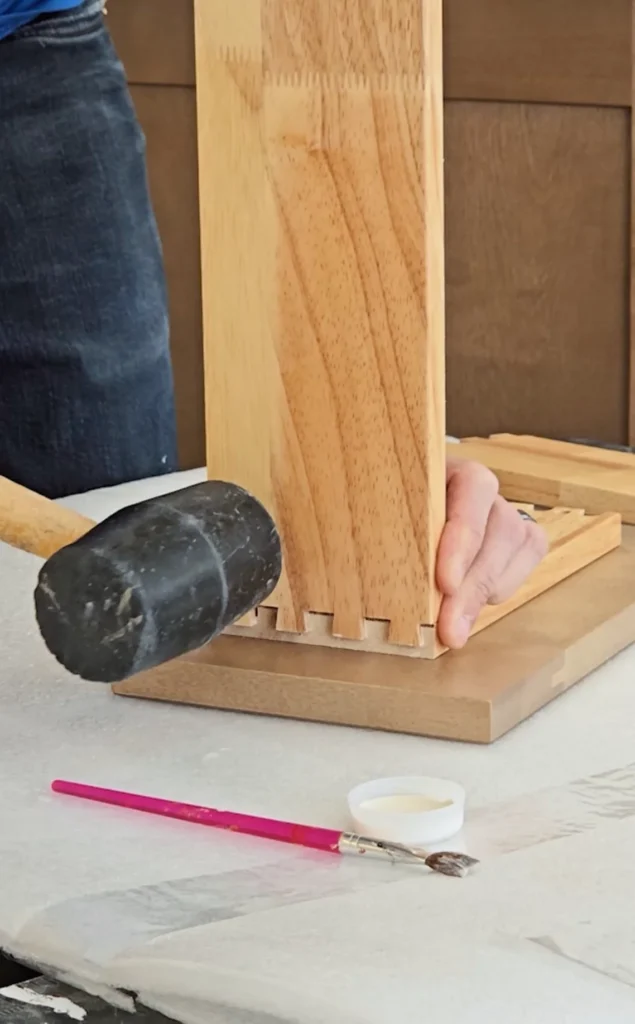
  1. Brush or apply a dab of glue onto each dovetail on the drawer front. Align the drawer side and gently tap it into place with a rubber mallet, working back and forth evenly. Stop the moment the joint is flush — don’t overdrive.
  2. Repeat for the drawer back. Once in, check the bottom is still square and adjust if needed. Brad nails can be used to secure the joint if time is urgent.
Tapping the dovetail joint flush — work slowly and evenly with the mallet.
  1. Attach the drawer adjusters to the bottom (mind the left/right markings). Screw on the drawer slides and mount them to the cabinet back panel.
  2. Install rubber bumpers on all four corners. Slide the drawer in, aligning the back hole with the silver tab until you hear it click.
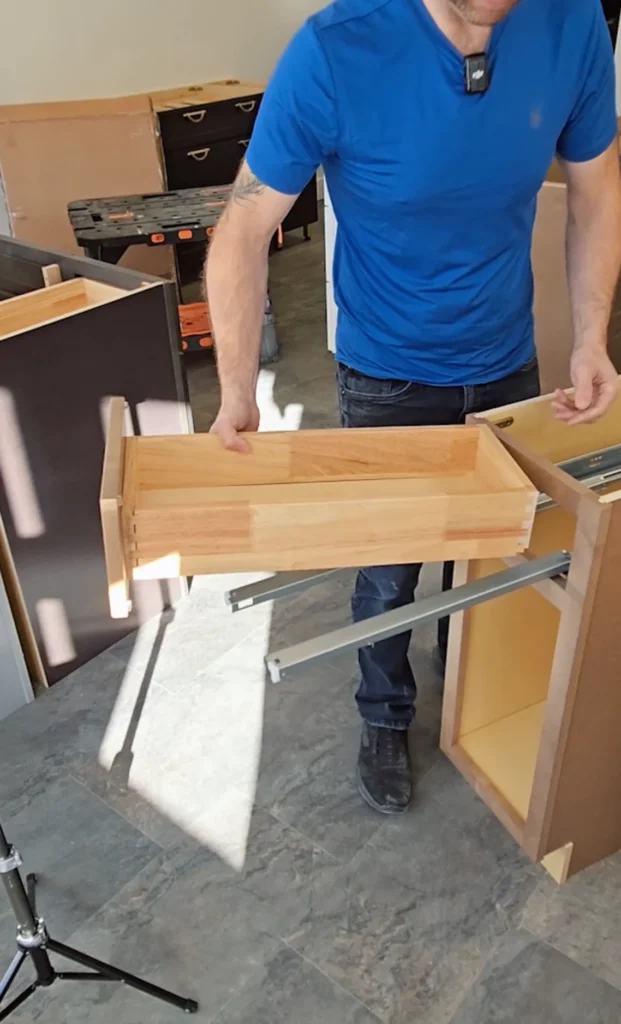
Drawer getting mounted onto slides
Drawer getting mounting onto the slides

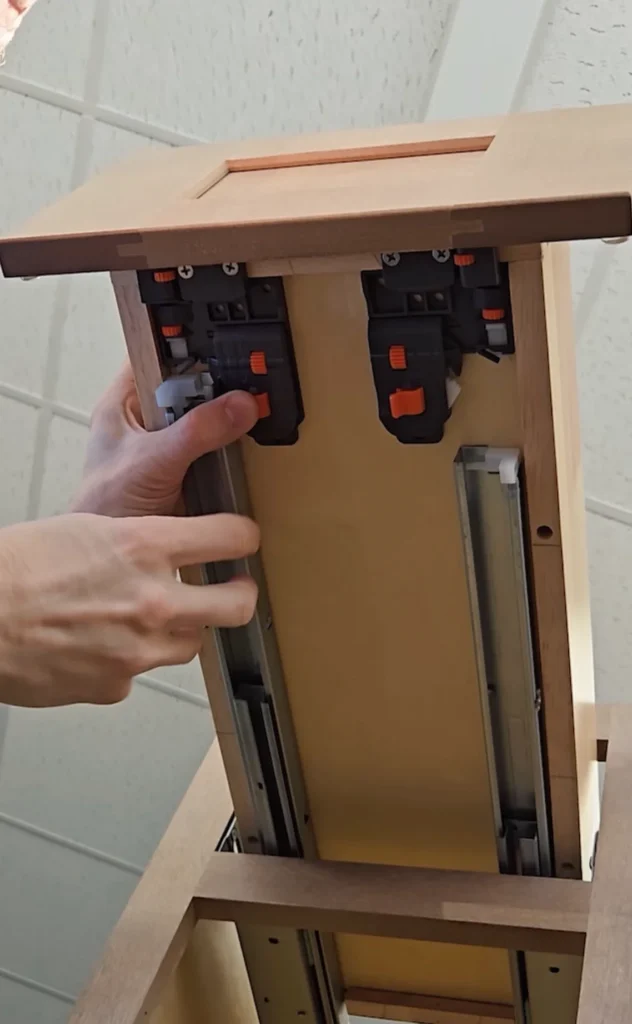
To remove the drawer later, pull the orange release tabs on each slide.

Orange Release Tabs to Release Drawer from Slides

Installing the Cabinet Door

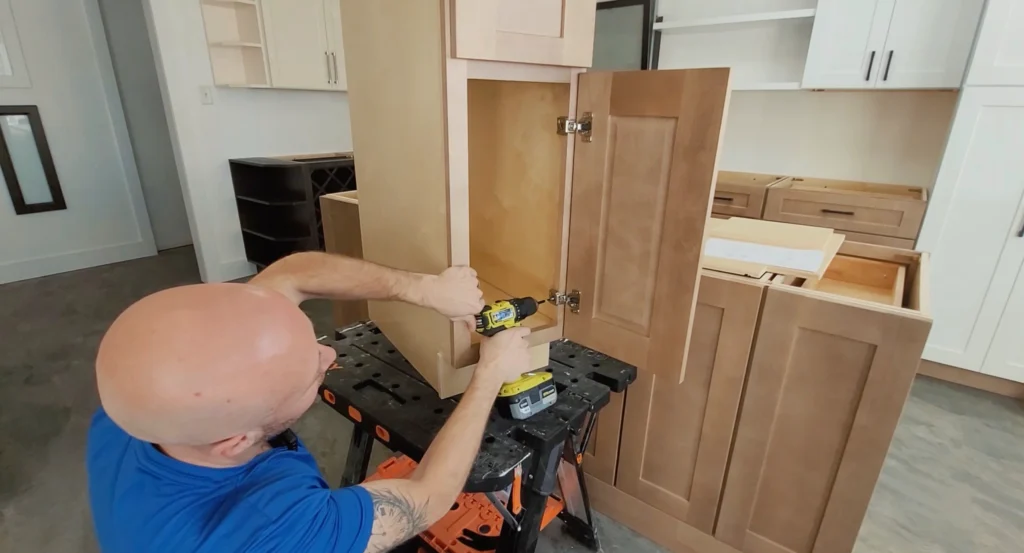
The face frame is pre-drilled on both sides so the door can open left or right. Attach the hinges to your chosen side using large panhead screws, leaving slight play for adjustment. Align the door with the hinges, press it in, and screw it to the hinges. Finish by pressing rubber bumpers onto the door interior.

Hinges and doors mounted to face frame
Hinges mounted to face frame, door aligned and screwed into place.

Finishing Touches: Shelf, Toe Kick & Pin Hole Repair

Insert the shelf clips into the cabinet walls and set the shelf in place. After the cabinet is installed, cut the toe kick to length and pin it in position.

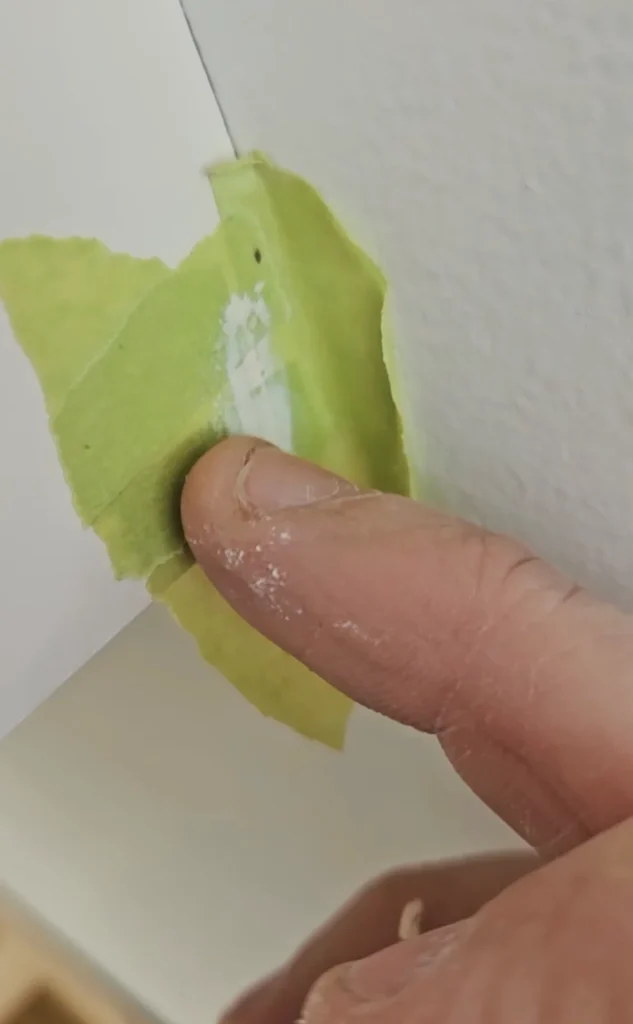
Every Blueprint Cabinets order includes a touch-up kit. For finished side panels with pin holes:

  1. Mask around each hole with small pieces of masking tape.
  2. Shave off a small piece of colour-matched putty, warm it in your fingers, and rub it into the hole.
  3. Peel off the tape and wipe with a damp rag. Standing back, the holes virtually disappear.
Colour matched putty for nail holes
Colour-matched putty makes pin holes nearly invisible on finished panels.

Why Choose Blueprint Cabinets?

Blueprint Cabinets are designed to make DIY kitchen renovation genuinely achievable. The cabinets ship with well-organized hardware, clear box coding, pre-drilled components, and everything you need for a solid build. AA-grade plywood construction, dovetail drawer boxes, and soft-close hardware deliver quality that rivals much more expensive installed cabinetry.

Whether you’re tackling a full kitchen renovation or replacing a few units, Blueprint Cabinets gives you the tools, the parts, and the guidance to get it done right — at a fraction of the cost.

Completed build
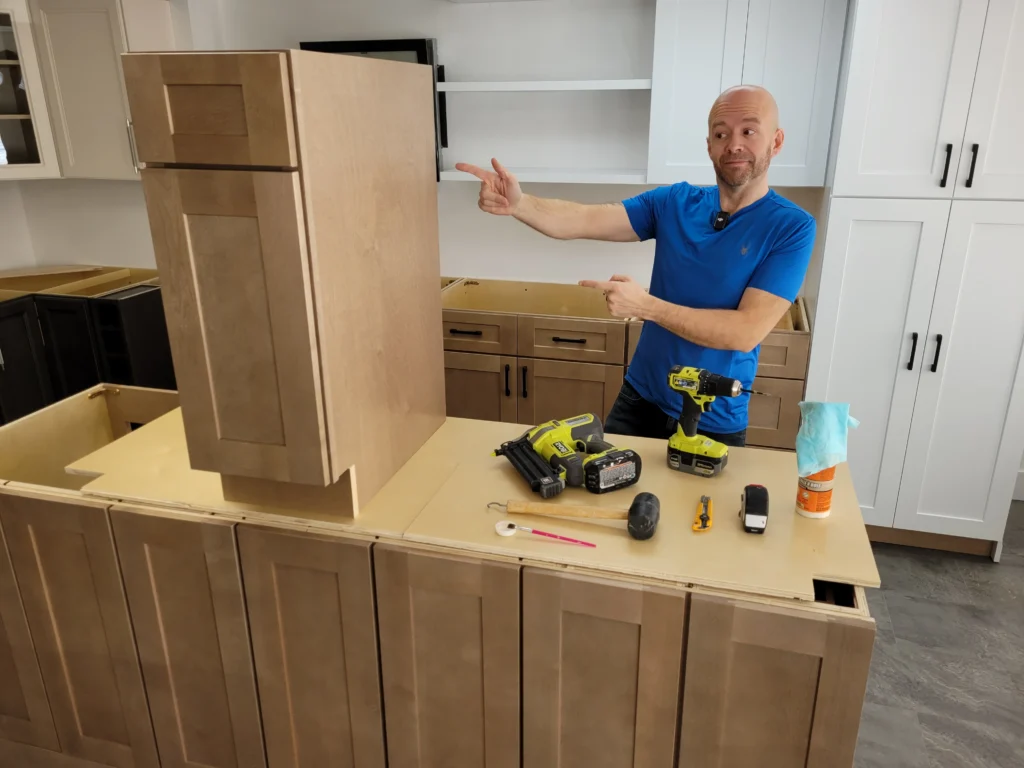
The completed cabinet — door, drawer, and shelf all installed and ready for your kitchen.

Ready to start your kitchen renovation?

Visit www.blueprintcabinets.ca to browse cabinet styles, get a quote, and watch more assembly videos. Your dream kitchen is closer — and more affordable — than you think.

Table of Contents